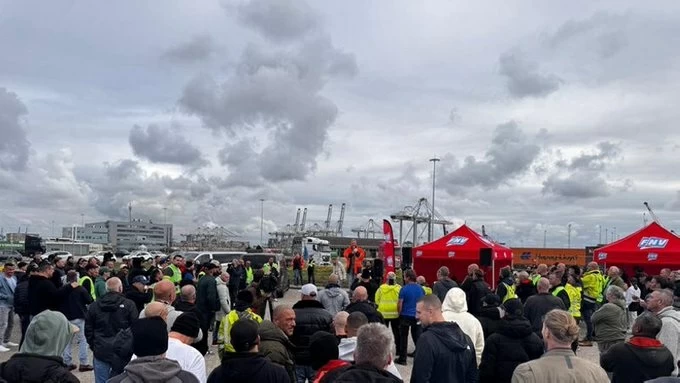
دخل عمال الموانئ في هولندا إضرابًا، اليوم (الجمعة)، في إطار موجة من الاحتجاجات العمالية المقررة خلال سبتمبر، رفضًا لخطط حكومية تتضمن خفض مخصصات الضمان الاجتماعي لتمويل زيادة الإنفاق الدفاعي.
وتوقفت عمليات التعامل مع السفن في موانئ روتردام وأمستردام وزيلاند من الساعة 11:15 صباحًا وحتى السابعة مساءً، في خطوة من شأنها تعطيل حركة الملاحة في أحد أهم المراكز التجارية واللوجستية في أوروبا.
ويأتي الإضراب ضمن تحرك عمالي واسع يُعد من الأكبر في السنوات الأخيرة، بمشاركة آلاف العمال من قطاعات مختلفة، بينهم مشغلو السكك الحديدية وسائقو الحافلات وعمال المعادن وموظفو شركة «هاينكن»، إلى جانب موظفين حكوميين.
وتحتج النقابات على خطط لخفض مخصصات الضمان الاجتماعي بنحو 6.5 مليار يورو، معتبرة أن تحميل شبكة الأمان الاجتماعي كلفة تعزيز الإنفاق الدفاعي يمثل تهديدًا لحقوق العمال والمزايا الاجتماعية التي يحصلون عليها.
وقال ناين كويمان، نائب رئيس أكبر نقابة عمالية في هولندا «إف إن في»، إن من الضروري زيادة الضغط على الحكومة لمنعها من «تقويض شبكة الأمان الاجتماعي».
وتواجه الحكومة الهولندية ضغوطًا لزيادة الإنفاق الدفاعي بما يتماشى مع التزامات حلف شمال الأطلسي «الناتو»، الذي أقر هدفًا جديدًا يقضي برفع الإنفاق المرتبط بالدفاع والأمن إلى ما يعادل 5% من الناتج المحلي الإجمالي بحلول عام 2035.
وتقدر الحكومة حاجتها إلى نحو 19 مليار يورو إضافية سنويًا لتحقيق مستوى الإنفاق المستهدف، وتسعى إلى توفير هذه الموارد من خلال مزيج من خفض الإنفاق على الضمان الاجتماعي، وزيادة الضرائب، وتشديد بعض نفقات الرعاية الصحية العامة.
وتثير طريقة تمويل الزيادة الدفاعية خلافًا سياسيًا واجتماعيًا في هولندا، إذ ترفض الحكومة الاعتماد على مزيد من الاقتراض لتمويل الالتزامات الجديدة، في وقت اختارت فيه دول أوروبية أخرى اللجوء إلى أدوات اقتراض مشتركة على مستوى الاتحاد الأوروبي للمساعدة في تمويل الإنفاق الدفاعي.
وقال متحدث باسم وزير المالية إيلكو هاينن، المنتمي إلى حزب الشعب من يمين الوسط، إن الاقتراض «لا يقدم إلا راحة مؤقتة ويجب تعويضه لاحقًا»، مضيفًا أن الحكومة لا تريد «تمرير الديون إلى الأجيال المستقبلية».
ومن المتوقع أن تتواصل التحركات الاحتجاجية خلال الأيام القادمة، مع استعداد قطاعات أخرى لتنظيم إضرابات وتجمعات، في تصعيد يعكس حجم الخلاف بين الحكومة والنقابات حول كيفية تحقيق التوازن بين تعزيز القدرات الدفاعية لهولندا والإنفاق على الخدمات والمزايا الاجتماعية.
Port workers in the Netherlands went on strike today (Friday) as part of a wave of planned labor protests throughout September, in opposition to government plans that include cutting social security benefits to fund an increase in defense spending.
Operations handling ships at the ports of Rotterdam, Amsterdam, and Zeeland were halted from 11:15 AM until 7 PM, a move that is expected to disrupt shipping in one of the most important commercial and logistical hubs in Europe.
The strike is part of a broad labor movement considered one of the largest in recent years, involving thousands of workers from various sectors, including railway operators, bus drivers, metalworkers, and employees of Heineken, along with government employees.
Unions are protesting plans to cut social security benefits by about 6.5 billion euros, arguing that placing the cost of increased defense spending on the social safety net threatens workers' rights and the social benefits they receive.
Nynke Koeman, vice president of the largest labor union in the Netherlands, FNV, stated that it is essential to increase pressure on the government to prevent it from "undermining the social safety net."
The Dutch government is facing pressure to increase defense spending in line with NATO commitments, which has set a new goal of raising defense and security-related spending to 5% of GDP by 2035.
The government estimates it needs about 19 billion euros more annually to achieve the targeted spending level, and it seeks to secure these resources through a mix of cutting social security spending, increasing taxes, and tightening some public healthcare expenditures.
The method of funding the defense increase is causing political and social controversy in the Netherlands, as the government refuses to rely on further borrowing to finance new commitments, while other European countries have chosen to resort to joint borrowing tools at the EU level to help fund defense spending.
A spokesperson for Finance Minister Ilko Heinen, who belongs to the center-right People's Party, stated that borrowing "only provides temporary relief and must be compensated later," adding that the government does not want to "pass on debts to future generations."
Protests are expected to continue in the coming days, with other sectors preparing to organize strikes and gatherings, in an escalation that reflects the extent of the disagreement between the government and unions over how to balance enhancing the Netherlands' defense capabilities with spending on social services and benefits.