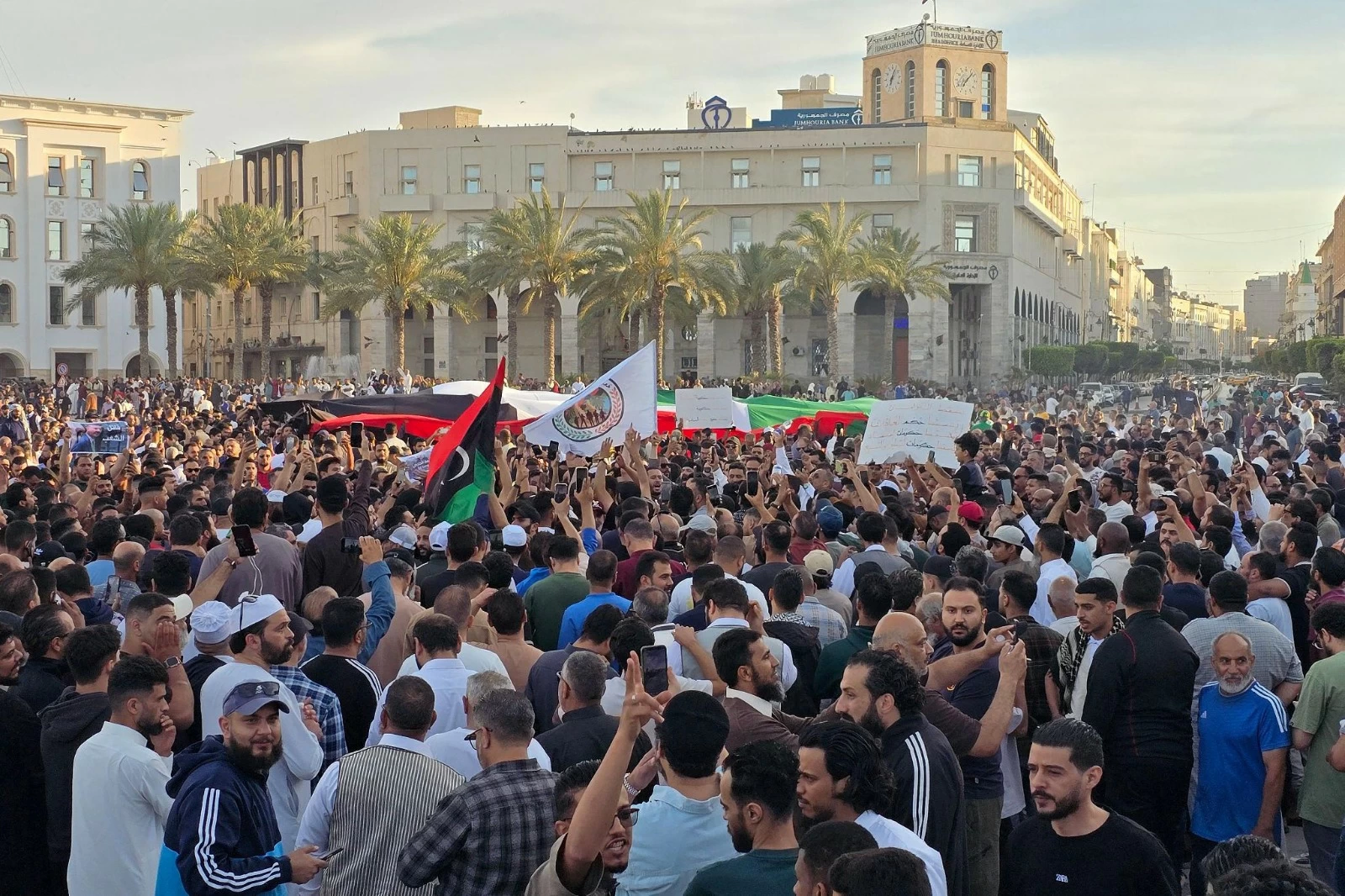
دخلت الاحتجاجات المتصاعدة في العاصمة الليبية طرابلس مرحلة جديدة من التصعيد، بعدما أقدم محتجون، اليوم (الجمعة)، على إغلاق مقر المجلس الرئاسي في منطقة النوفليين، ومقر مجلس النواب في منطقة زاوية الدهماني، في خطوة تعكس انتقال التحركات من الاحتجاج على تدهور الخدمات إلى استهداف عدد متزايد من مؤسسات الدولة والأجسام السياسية.
وجاء إغلاق مقري المجلس الرئاسي ومجلس النواب بعد يوم واحد من إغلاق خمس وزارات وهيئة حكومية في العاصمة، شملت وزارة الخارجية بمنطقة زاوية الدهماني، ووزارة الثروة البحرية، ووزارة التخطيط، ووزارة الزراعة، إلى جانب هيئة مكافحة الفساد.
وسبق ذلك تصعيد مماثل طال عدداً من المؤسسات والمرافق الحكومية والخدمية والنفطية، من بينها وزارة الشباب ووزارة الحكم المحلي، إضافة إلى الإدارة العامة لشركة مليتة للنفط والغاز، والإدارة العامة لشركة الزويتينة للنفط، ودائرة التحكم الفرعي طرابلس التابعة للشركة العامة للكهرباء، فضلاً عن مصلحة الطيران المدني. وأدت تحركات المحتجين خلال الأيام الماضية إلى تعطيل أو إغلاق أجزاء من مرافق حيوية في العاصمة ومناطق أخرى من غرب ليبيا.
وكانت أزمة الكهرباء الشرارة الرئيسية التي أشعلت موجة الاحتجاجات الحالية، في ظل انقطاعات طويلة ومتكررة للتيار، تفاقمت مع ارتفاع درجات الحرارة وزيادة الطلب على الكهرباء. وأعلنت الشركة العامة للكهرباء في وقت سابق فقدان نحو 1350 ميغاواط من القدرة التوليدية منذ منتصف يوليو، بسبب مزيج من نقص إمدادات الغاز والوقود، وأعطال فنية في محطات الإنتاج وشبكات النقل، إلى جانب عوامل أمنية.
ومع استمرار الأزمة، اتسعت دائرة الغضب الشعبي لتتجاوز المطالبة بتحسين التغذية الكهربائية والخدمات العامة، حيث بدأ المحتجون في طرح مطالب سياسية أكثر اتساعاً، من بينها رحيل أو حل الأجسام السياسية القائمة وإجراء انتخابات، إلى جانب الدعوة إلى إنهاء ما يعتبرونه حالة الانقسام والمرحلة الانتقالية المستمرة في البلاد. وتشمل هذه المطالب الحكومة والمجلس الرئاسي ومجلس النواب والمجلس الأعلى للدولة.
ويأتي ذلك في وقت لا تزال فيه ليبيا تعاني انقساماً مؤسسياً وسياسياً بين حكومة الوحدة الوطنية برئاسة عبد الحميد الدبيبة التي تتخذ من طرابلس مقراً لها، وإدارة منافسة في شرق البلاد مرتبطة بمجلس النواب، بينما تعمل بعثة الأمم المتحدة على دفع مسار سياسي يفضي إلى توحيد مؤسسات الدولة وإجراء انتخابات وطنية. وفي يونيو الماضي، اختتم الحوار المنظم الذي رعته البعثة الأممية أعماله بتوصيات ركزت على توحيد مؤسسات الدولة ووضع إطار يمهد لإجراء انتخابات وطنية.
وتكتسب الإغلاقات الأخيرة دلالة إضافية مع وصول الاحتجاجات إلى منشآت النفط والغاز، التي تمثل شرياناً رئيسياً للاقتصاد الليبي ومصدراً أساسياً لإيرادات الدولة. وكانت احتجاجات الأيام الماضية قد تسببت في اضطرابات بمجمع مليتة للنفط والغاز، قبل أن تعلن السلطات استعادة السيطرة على الموقع واستئناف إمدادات الغاز لمحطات توليد الكهرباء.
The escalating protests in the Libyan capital, Tripoli, have entered a new phase of escalation, as protesters today (Friday) closed the headquarters of the Presidential Council in the Nawfaliyah area and the headquarters of the House of Representatives in the Zawiyat al-Dahmani area, in a move that reflects the shift of actions from protesting the deterioration of services to targeting an increasing number of state institutions and political bodies.
The closure of the Presidential Council and House of Representatives headquarters came just one day after the closure of five ministries and a government agency in the capital, including the Ministry of Foreign Affairs in the Zawiyat al-Dahmani area, the Ministry of Marine Resources, the Ministry of Planning, the Ministry of Agriculture, along with the Anti-Corruption Authority.
This was preceded by a similar escalation that affected several governmental, service, and oil institutions, including the Ministry of Youth and the Ministry of Local Government, in addition to the General Administration of Mellitah Oil and Gas Company, the General Administration of Zueitina Oil Company, and the Sub-Control Department in Tripoli affiliated with the General Electricity Company, as well as the Civil Aviation Authority. The actions of the protesters in recent days have led to the disruption or closure of parts of vital facilities in the capital and other areas of western Libya.
The electricity crisis was the main spark that ignited the current wave of protests, amid long and repeated power outages, exacerbated by rising temperatures and increased demand for electricity. The General Electricity Company announced earlier the loss of about 1350 megawatts of generation capacity since mid-July, due to a combination of gas and fuel supply shortages, technical malfunctions in production stations and transmission networks, along with security factors.
As the crisis continues, the circle of public anger has widened to go beyond demands for improving electricity supply and public services, as protesters have begun to raise broader political demands, including the departure or dissolution of the existing political bodies and conducting elections, along with calls to end what they consider the state of division and the ongoing transitional phase in the country. These demands include the government, the Presidential Council, the House of Representatives, and the High Council of State.
This comes at a time when Libya is still suffering from institutional and political division between the Government of National Unity led by Abdul Hamid Dbeibah, which is based in Tripoli, and a rival administration in the east of the country linked to the House of Representatives, while the United Nations mission works to push a political process that leads to the unification of state institutions and the holding of national elections. Last June, the organized dialogue sponsored by the UN mission concluded its work with recommendations focused on unifying state institutions and establishing a framework that paves the way for national elections.
The recent closures gain additional significance as protests reach oil and gas facilities, which represent a major artery for the Libyan economy and a primary source of state revenues. Protests in recent days have caused disruptions at the Mellitah Oil and Gas Complex, before authorities announced the restoration of control over the site and the resumption of gas supplies to power generation stations.