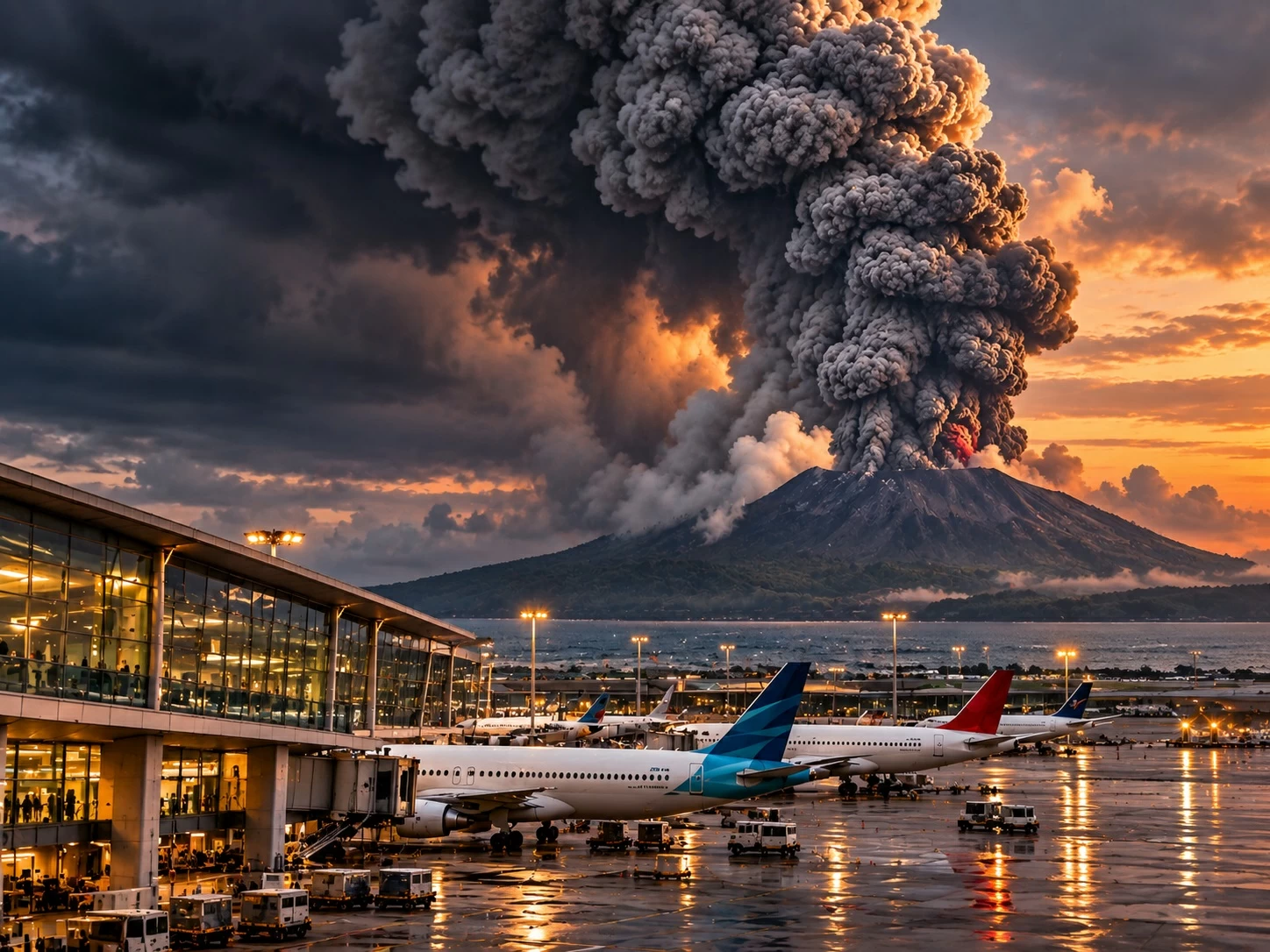
في غضون ساعات قليلة، تحوّلت الأجواء الهادئة فوق جنوب شرق آسيا إلى ساحة استنفار جوي غير مسبوق. بعدما هاجم السماء تسونامي من الرماد البركاني الأسود، قذفه بركان «أناك كراكاتاو» الثائر منذ يوم الجمعة الماضي، ونجح في فرض «حظر تجول» قسري على حركة الطيران الإندونيسية، ليقطع شريان الحياة الجوي عن واحدة من أكثر الوجهات الحيوية في العالم، ملقياً بظلاله الكثيفة على مئات الرحلات الدولية، وفي مقدمتها الرحلات السعودية والعربية.
وانطلقت شرارة الأزمة بإنذار أحمر عاجل أطلقته هيئة الأرصاد والجيوفيزياء الإندونيسية، مفاده أن الرماد البركاني الزجاجي يزحف بسرعة الرياح نحو الممرات الجوية. ولم تتأخر وزارة النقل الإندونيسية في اتخاذ القرار الأصعب، إذ عمدت إلى تعليق العمليات فوراً في 6 مطارات رئيسية.
وعلى رأس القائمة جاء مطار سوكارنو هاتا الدولي في العاصمة جاكرتا (الذي يعتبر الرئة الجوية للبلاد) ومعه مطار حليم بردانكوسوما، ومطار باندونغ، ولامبونغ. هذا الإغلاق المفاجئ شلّ حركة أكثر من 300 رحلة جوية، وترك ما يزيد على 22000 مسافر في حالة ذهول داخل صالات الانتظار، يراقبون شاشات المغادرة والوصول وهي تتلون باللون الأحمر (Cancelled/Diverted).
ماذا حدث لرحلة «الخطوط السعودية»؟
تسبب الإغلاق المفاجئ للأجواء في إلغاء وتأجيل وتحويل مسار عدد من الرحلات المرتبطة بالمنطقة، حيث أظهرت بيانات الملاحة الجوية الحية إلغاء رحلة الرمز المشترك SV6119 القادمة من جاكرتا إلى جدة، وهي رحلة تسويقية تابعة للخطوط السعودية ومسجل عليها مسافرون عرب لكنها تُشغل فعلياً بطائرة وطاقم تابع لشركة «جارودا إندونيسيا» بموجب تحالف «سكاي تيم» التجاري، إلى جانب إلغاء رحلات ربط داخلية للمسافرين العرب تحمل رموزاً تابعة للخطوط السعودية على ذات الناقل الإندونيسي، بينما تأثرت مسارات دولية أخرى لشركات طيران عربية كبرى، وسط استنفار كامل من السفارات العربية لمتابعة سلامة مواطنيها وتسهيل شؤون العالقين منهم في مطارات دول الجوار.
ولم يتوقف التأثير عند هذه الرحلة، بل تم إلغاء وتأجيل العديد من الرحلات المشتركة (Codeshare) التي تجمع خطوط عربية بالناقل الإندونيسي «جارودا إندونيسيا»، خاصة تلك القادمة من بالي، وسورابايا، وسنغافورة باتجاه جاكرتا، مما تسبب في تعديل اضطراري لخطط سفر مئات السياح الخليجيين والعرب.
الرحلات السعودية لم تكن وحدها في هذه المواجهة الجوية، فشركات طيران عربية كبرى وجدت نفسها أمام «جدار الرماد»:
- طيران الإمارات والخطوط القطرية والاتحاد للطيران: اضطرت هذه الخطوط إلى إعادة جدولة رحلاتها المتجهة إلى جاكرتا، أو تحويل مسارها إلى مطارات بديلة آمنة لم تتأثر بالرماد (مثل مطاري كيرتاغاتي وغواندا).
- معاناة ترانزيت العرب: مئات المسافرين العرب القادمين من دبي، والدوحة، وكوالالمبور باتجاه العاصمة الإندونيسية وجدوا أنفسهم عالقين في مطارات دول الجوار، بانتظار زوال الغبار البركاني الذي يحجب الرؤية ويهدد سلامة محركات الطائرات.
وأكدت السلطات الإندونيسية أن الإغلاق «مؤقت» ومرتبط بحركة الرياح وكثافة انبعاثات بركان «أناك كراكاتاو». وفي هذه الأثناء، دعت سفارات عربية في جاكرتا، مواطنيها إلى توخي الحذر، ومتابعة حسابات شركات الطيران الرسمية لتعديل الحجوزات أو طلب التعويضات، والابتعاد تماماً عن محيط المناطق البركانية.
ويبقى السؤال الأبرز حالياً: هل ستنجح فرق الأرصاد الجوية في فتح «ممرات آمنة» خلال الساعات القادمة؟ أم أن «أناك كراكاتاو» سيواصل فرض كلمته على أجواء جنوب شرق آسيا؟
Within a few hours, the calm atmosphere over Southeast Asia transformed into an unprecedented air alert zone. After a tsunami of black volcanic ash attacked the sky, spewed by the erupting "Anak Krakatau" volcano since last Friday, it succeeded in imposing a forced "curfew" on Indonesian air traffic, cutting off the air lifeline to one of the world's most vital destinations, casting its thick shadows over hundreds of international flights, particularly Saudi and Arab flights.
The spark of the crisis was ignited by an urgent red alert issued by the Indonesian Meteorology and Geophysics Agency, indicating that the glassy volcanic ash was rapidly creeping toward the air corridors. The Indonesian Ministry of Transportation did not hesitate to make the toughest decision, as it immediately suspended operations at 6 major airports.
At the top of the list was Soekarno-Hatta International Airport in the capital Jakarta (which is considered the country's air lung), along with Halim Perdanakusuma Airport, Bandung Airport, and Lampung. This sudden closure paralyzed the movement of more than 300 flights and left over 22,000 passengers in shock inside the waiting halls, watching the departure and arrival screens turn red (Cancelled/Diverted).
What happened to the "Saudi Airlines" flight?
The sudden closure of the airspace led to the cancellation, delay, and rerouting of several flights associated with the region, as live air navigation data showed the cancellation of the codeshare flight SV6119 from Jakarta to Jeddah, which is a marketing flight operated by Saudi Airlines and registered with Arab passengers but is actually operated by a Garuda Indonesia aircraft and crew under the "SkyTeam" commercial alliance, in addition to the cancellation of domestic connecting flights for Arab passengers bearing codes from Saudi Airlines on the same Indonesian carrier, while other international routes for major Arab airlines were affected, amidst a full alert from Arab embassies to monitor the safety of their citizens and facilitate the affairs of those stranded in neighboring airports.
The impact did not stop at this flight; many codeshare flights combining Arab airlines with the Indonesian carrier "Garuda Indonesia" were also canceled and delayed, especially those coming from Bali, Surabaya, and Singapore towards Jakarta, causing emergency adjustments to the travel plans of hundreds of Gulf and Arab tourists.
Saudi flights were not the only ones facing this aerial confrontation, as major Arab airlines found themselves up against the "wall of ash":
- Emirates, Qatar Airways, and Etihad Airways: These airlines were forced to reschedule their flights to Jakarta or reroute them to safe alternative airports that were not affected by the ash (such as Kertajati and Gwandha airports).
- Transit struggles for Arabs: Hundreds of Arab travelers coming from Dubai, Doha, and Kuala Lumpur towards the Indonesian capital found themselves stranded in neighboring airports, waiting for the volcanic dust to clear, which obscured visibility and threatened the safety of aircraft engines.
The Indonesian authorities confirmed that the closure is "temporary" and linked to wind patterns and the intensity of emissions from the "Anak Krakatau" volcano. Meanwhile, Arab embassies in Jakarta urged their citizens to exercise caution, follow the official accounts of airlines to modify reservations or request compensations, and stay completely away from volcanic areas.
The most pressing question remains: Will the meteorological teams succeed in opening "safe corridors" in the coming hours? Or will "Anak Krakatau" continue to assert its dominance over the skies of Southeast Asia?