يختبر باحثون تقنية جديدة لتصحيح عيوب الإبصار تعتمد على إعادة تشكيل القرنية باستخدام الكهرباء، دون الحاجة إلى الليزر أو إحداث شقوق جراحية، في نتائج أولية قد تفتح مستقبلاً مساراً مختلفاً عن عمليات تصحيح النظر التقليدية مثل «الليزك».
وتعتمد التقنية، التي تُعرف باسم «إعادة التشكيل الكهروميكانيكي» (EMR)، على تطبيق جهد كهربائي صغير لتغيير البيئة الكيميائية داخل أنسجة القرنية بصورة مؤقتة، ما يجعلها أكثر مرونة وقابلية لإعادة التشكيل.
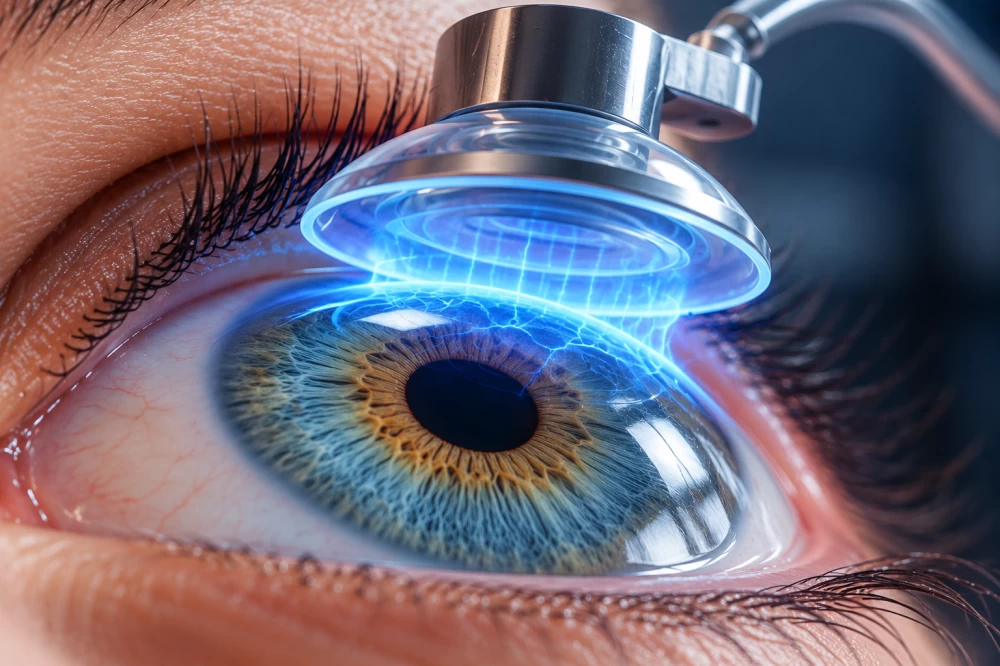
وطور الباحثون لهذا الغرض عدسات خاصة مصنوعة من البلاتين، توضع فوق القرنية لتعمل في الوقت نفسه قالباً للشكل المطلوب وقطباً كهربائياً.
وعند تطبيق جهد كهربائي صغير، يحدث تغير مضبوط في درجة الحموضة داخل القرنية، ما يضعف بصورة مؤقتة بعض الروابط التي تحافظ على صلابة الأنسجة ويسمح بإعادة تشكيلها.
وأظهرت التجارب أن القرنية استطاعت خلال نحو دقيقة واحدة التكيف مع شكل العدسة البلاتينية، ثم الاحتفاظ بالشكل الجديد بعد عودة البيئة الكيميائية داخل النسيج إلى وضعها الطبيعي.
واختبر الباحثون الطريقة على 12 عين أرنب خارج الجسم، وعوملت 10 منها لمحاكاة قصر النظر. ونجحت التقنية في جميع العيون العشر في تغيير شكل القرنية وصولاً إلى قوة التركيز المستهدفة.
ويختلف هذا النهج جذرياً عن «الليزك»، الذي يعتمد على إزالة كميات دقيقة من أنسجة القرنية بالليزر لتغيير انحنائها، بينما تسعى الطريقة الجديدة إلى تعديل شكل النسيج دون إزالة جزء منه.
ويرى الباحثون أن التقنية قد تكون مستقبلاً أبسط وأقل تكلفة من بعض إجراءات تصحيح النظر الحالية، إضافة إلى إمكانية تجنب بعض المخاطر المرتبطة بإزالة أنسجة القرنية بصورة دائمة.
لكن النتائج ما تزال في مرحلة تجريبية مبكرة للغاية، ولم تُختبر التقنية حتى الآن على البشر؛ إذ أُجريت التجارب الحالية على عيون أرانب مستأصلة، ما يعني أن الطريق لا يزال طويلاً قبل تحديد مدى سلامتها وفاعليتها كإجراء طبي لتصحيح النظر.
ويعتزم الباحثون مواصلة تطوير الطريقة وإجراء المزيد من الدراسات لتقييم استقرار شكل القرنية بعد العلاج وسلامة الأنسجة، قبل الانتقال مستقبلاً إلى مراحل تجريبية أكثر تقدماً.
Researchers are testing a new technique for correcting vision defects that relies on reshaping the cornea using electricity, without the need for lasers or surgical incisions, in initial results that may open a different path from traditional vision correction procedures like "LASIK."
The technique, known as "Electromechanical Reshaping" (EMR), involves applying a small electrical voltage to temporarily change the chemical environment within the corneal tissues, making them more flexible and amenable to reshaping.
For this purpose, researchers have developed special lenses made of platinum, which are placed over the cornea to simultaneously act as a mold for the desired shape and an electrode.
When a small electrical voltage is applied, a controlled change in pH occurs within the cornea, temporarily weakening some of the bonds that maintain the tissue's rigidity and allowing it to be reshaped.
Experiments showed that the cornea was able to adapt to the shape of the platinum lens in about one minute, and then retain the new shape after the chemical environment within the tissue returned to its normal state.
The researchers tested the method on 12 rabbit eyes ex vivo, with 10 of them treated to simulate myopia. The technique successfully changed the shape of the cornea in all ten eyes to achieve the targeted focusing power.
This approach is fundamentally different from "LASIK," which relies on removing precise amounts of corneal tissue with a laser to change its curvature, while the new method seeks to modify the shape of the tissue without removing any part of it.
The researchers believe that the technique could potentially be simpler and less expensive than some current vision correction procedures, in addition to avoiding some risks associated with the permanent removal of corneal tissue.
However, the results are still in a very early experimental stage, and the technique has not yet been tested on humans; the current experiments were conducted on excised rabbit eyes, meaning that there is still a long way to go before determining its safety and effectiveness as a medical procedure for vision correction.
The researchers intend to continue developing the method and conducting further studies to assess the stability of the cornea's shape after treatment and the safety of the tissues, before moving on to more advanced experimental stages in the future.