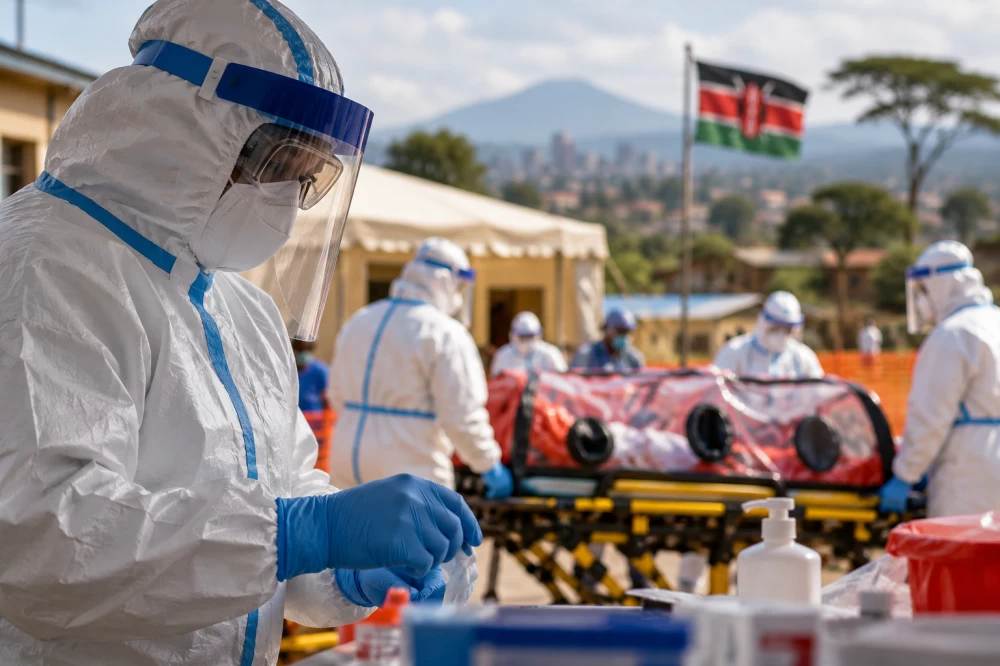
أعلنت السلطات الصحية في كينيا ارتفاع عدد الإصابات المؤكدة بفايروس «إيبولا» إلى 8 حالات، بينها وفاة واحدة، بعد تسجيل إصابة جديدة لرجل يبلغ من العمر 49 عاماً، كان مخالطاً لأول مريض سُجلت إصابته بالفايروس في البلاد، وسط تكثيف إجراءات المراقبة الصحية وتتبع المخالطين للحد من انتشار العدوى.
وقال المدير العام للصحة في كينيا، باتريك أموث، أمس (الأحد)، إن الإصابة الجديدة تعود إلى مرافق مريض ظهرت عليه أعراض الحمى والصداع وآلام العضلات، قبل أن تؤكد الفحوص المخبرية إصابته بسلالة «بونديبوغيو» من فايروس إيبولا.
وأوضح أن السلطات أجرت فحوصاً لـ38 شخصاً، جاءت نتيجة أحدهم إيجابية، مشيراً إلى أن المصاب كان يخضع للحجر الصحي بعد تحديد مخالطته للحالة الأولى، وأنه لم تُرصد حتى الآن مؤشرات على انتقال العدوى داخل المجتمع خارج نطاق المخالطين المعروفين.
إصابات بين العاملين الصحيين
وكانت السلطات الكينية قد أعلنت (السبت) تسجيل أربع إصابات إضافية، شملت ثلاثة من العاملين في القطاع الصحي وأحد أقارب المريض الأول، الذي وصل إلى العاصمة نيروبي في الثالث من أكتوبر الجاري قادماً من جمهورية الكونغو الديمقراطية عبر أوغندا، قبل وفاته في الخامس من الشهر نفسه.
وأفادت السلطات بأن ستة من المصابين يتلقون الرعاية الطبية وحالتهم مستقرة، فيما تواصل الفرق الصحية متابعة الأشخاص الذين تعرضوا للفايروس.
مراقبة 130 مخالطاً
وحددت السلطات الصحية 130 شخصاً خالطوا الحالة الأولى، من بينهم عاملون في القطاع الصحي، مع إخضاع 128 منهم للحجر والمراقبة، ومتابعة ظهور أي أعراض محتملة خلال فترة حضانة الفايروس التي قد تصل إلى 21 يوماً.
كما شددت كينيا إجراءات الفحص الصحي في المنافذ الحدودية والمطارات، وخصصت مساراً في مطار نيروبي للرحلات القادمة من عشر دول مرتبطة بمناطق انتشار المرض، إلى جانب تفعيل خط ساخن للإبلاغ عن الحالات المشتبه بها.
مخاوف من امتداد التفشي الإقليمي
وتأتي الإصابات في كينيا بالتزامن مع استمرار تفشي إيبولا في جمهورية الكونغو الديمقراطية، حيث أعلنت السلطات الصحية امتداد المرض إلى إقليم ثامن.
وتثير سلالة «بونديبوغيو» مخاوف صحية نظراً إلى عدم توافر لقاح مرخص أو علاج نوعي معتمد لها، فيما تعتمد الاستجابة الطبية على الاكتشاف المبكر للحالات وعزل المصابين وتقديم الرعاية الداعمة ومراقبة المخالطين.
The health authorities in Kenya announced an increase in the confirmed cases of the Ebola virus to 8, including one death, following the registration of a new infection in a 49-year-old man who had contact with the first patient recorded in the country. This comes amid intensified health monitoring measures and tracking of contacts to limit the spread of the infection.
Kenya's Director General of Health, Patrick Amoth, stated yesterday (Sunday) that the new infection is linked to a caregiver of a patient who exhibited symptoms of fever, headache, and muscle pain, before laboratory tests confirmed his infection with the "Bundibugyo" strain of the Ebola virus.
He explained that the authorities conducted tests on 38 individuals, with one of them returning a positive result, noting that the infected person was under quarantine after being identified as a contact of the first case, and that no indicators of community transmission outside the known contacts have been observed so far.
Infections Among Healthcare Workers
The Kenyan authorities had announced (on Saturday) the registration of four additional infections, including three healthcare workers and one relative of the first patient, who arrived in the capital Nairobi on October 3rd from the Democratic Republic of the Congo via Uganda, before passing away on the fifth of the same month.
The authorities reported that six of the infected individuals are receiving medical care and their condition is stable, while health teams continue to monitor individuals who were exposed to the virus.
Monitoring 130 Contacts
The health authorities identified 130 individuals who had contact with the first case, including healthcare workers, with 128 of them placed under quarantine and monitoring, and tracking any potential symptoms during the virus's incubation period, which can last up to 21 days.
Kenya has also tightened health screening measures at border crossings and airports, designating a specific lane at Nairobi airport for flights arriving from ten countries linked to the disease outbreak, in addition to activating a hotline for reporting suspected cases.
Concerns Over Regional Spread
The infections in Kenya come amid the ongoing Ebola outbreak in the Democratic Republic of the Congo, where health authorities announced the spread of the disease to an eighth region.
The "Bundibugyo" strain raises health concerns due to the lack of a licensed vaccine or approved specific treatment, while the medical response relies on early detection of cases, isolation of infected individuals, providing supportive care, and monitoring contacts.