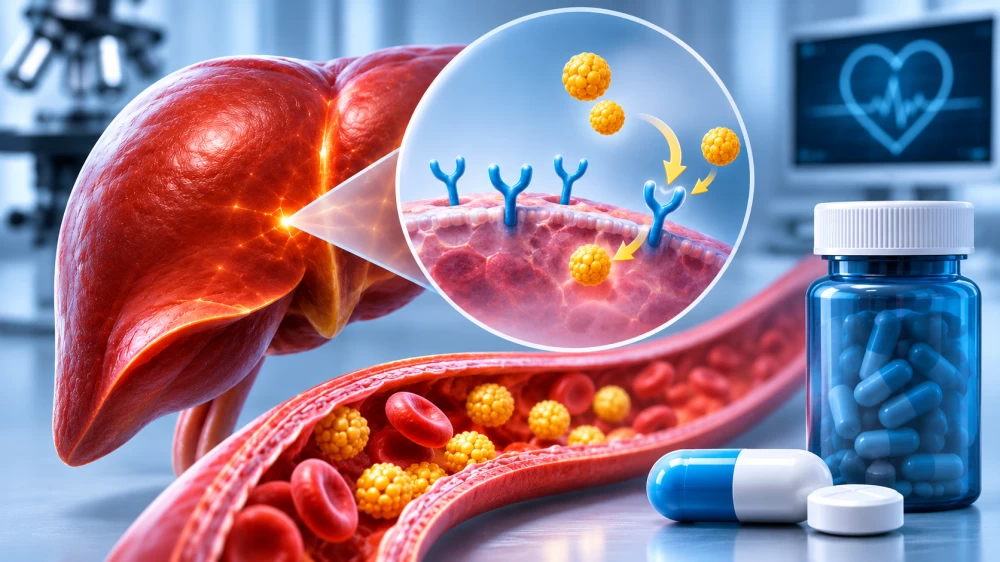
كشف باحثون في كلية الطب بجامعة كاليفورنيا عن مسار بيولوجي لم يكن معروفاً سابقاً، يفسّر كيف تؤدي الأنظمة الغذائية الغنية بالكوليسترول إلى إضعاف قدرة الكبد على التخلص من الكوليسترول الضار في الدم، ما قد يمهّد الطريق لتطوير علاجات جديدة لارتفاع الكوليسترول.
ووفقاً للدراسة المنشورة في دورية «Nature»، ونقل تفاصيلها موقع «Science Daily»، حدّد الباحثون آلية تتسبب في انخفاض عدد المستقبلات المسؤولة عن إزالة الكوليسترول الضار (LDL) من مجرى الدم، واكتشفوا أن تثبيط إنزيم معين قد يساعد على تعطيل هذه العملية.
كيف يؤثر النظام الغذائي في الكبد؟
وأوضح الباحث الرئيسي في الدراسة، الدكتور آلان سالتيل، أن العلماء يعرفون منذ سنوات أن الأنظمة الغذائية الغنية بالكوليسترول تقلل قدرة الكبد على إزالة الكوليسترول من الدم، إلا أن الأسباب الدقيقة وراء ذلك لم تكن مفهومة بالكامل.
ويؤدي الكبد دوراً أساسياً في تنظيم مستويات الكوليسترول، من خلال مستقبلات موجودة على سطح خلاياه تلتقط الكوليسترول الضار من الدم وتنقله إلى داخل الكبد لمعالجته.
وكلما زاد عدد هذه المستقبلات، ارتفعت قدرة الكبد على التخلص من الكوليسترول، وهو المبدأ الذي تعتمد عليه بعض العلاجات الحالية، مثل أدوية الستاتين ومثبطات بروتين PCSK9.
اكتشاف مسار بيولوجي جديد
وأظهرت تجارب أجراها الباحثون على الفئران والخلايا البشرية أن تناول كميات كبيرة من الكوليسترول ينشّط بروتيناً يُعرف باسم «Ral»، ما يؤدي إلى سلسلة من التفاعلات تقلل عدد مستقبلات الكوليسترول الضار في خلايا الكبد.
كما اكتشف الفريق دور إنزيم يُعرف باسم «CTSA» في هذه العملية، إذ يسهم في استنزاف المستقبلات المسؤولة عن إزالة الكوليسترول من الدم.
وعندما استخدم الباحثون مركباً تجريبياً لتثبيط نشاط الإنزيم، أصبحت مستقبلات الكوليسترول أكثر استقراراً، وانخفضت مستويات الكوليسترول الضار بصورة ملحوظة لدى الفئران.
دواء تجريبي قد يفتح باباً للعلاج
وتكمن أهمية الاكتشاف في أن المسار البيولوجي الجديد يختلف عن المسارات التي تستهدفها أدوية خفض الكوليسترول المستخدمة حالياً، ما قد يوفر خياراً علاجياً إضافياً للمرضى الذين لا يستجيبون للعلاجات المتاحة بصورة كافية.
وأشار الباحثون إلى أن دواءً تجريبياً يستهدف إنزيم «CTSA» سبق تطويره لعلاج محتمل لفشل القلب، واجتاز المرحلة الأولى من التجارب السريرية لتقييم سلامته لدى البشر، قبل توقف تطويره لأسباب استراتيجية.
ويرى الفريق البحثي أن نتائج اختبارات السلامة السابقة قد تساعد على تسريع الانتقال إلى المرحلة الثانية من التجارب السريرية، لاختبار مدى فاعلية الدواء في خفض مستويات الكوليسترول.
وأكد الباحثون أن النتائج لا تزال أولية، وأن فاعلية الدواء في خفض الكوليسترول لدى البشر لم تثبت حتى الآن، رغم النتائج المشجعة التي أظهرتها التجارب على الفئران.
Researchers at the University of California's School of Medicine have uncovered a previously unknown biological pathway that explains how diets rich in cholesterol weaken the liver's ability to eliminate harmful cholesterol from the blood, potentially paving the way for the development of new treatments for high cholesterol.
According to the study published in the journal "Nature," and detailed by the website "Science Daily," the researchers identified a mechanism that causes a decrease in the number of receptors responsible for removing harmful cholesterol (LDL) from the bloodstream, and discovered that inhibiting a certain enzyme may help disrupt this process.
How does diet affect the liver?
The lead researcher of the study, Dr. Alan Saltiel, explained that scientists have known for years that diets high in cholesterol reduce the liver's ability to remove cholesterol from the blood, but the exact reasons behind this were not fully understood.
The liver plays a crucial role in regulating cholesterol levels through receptors on the surface of its cells that capture harmful cholesterol from the blood and transport it into the liver for processing.
The more of these receptors there are, the greater the liver's ability to eliminate cholesterol, which is the principle on which some current treatments rely, such as statins and PCSK9 protein inhibitors.
Discovery of a new biological pathway
Experiments conducted by the researchers on mice and human cells showed that consuming large amounts of cholesterol activates a protein known as "Ral," leading to a series of reactions that reduce the number of harmful cholesterol receptors in liver cells.
The team also discovered the role of an enzyme known as "CTSA" in this process, as it contributes to the depletion of the receptors responsible for removing cholesterol from the blood.
When the researchers used an experimental compound to inhibit the enzyme's activity, the cholesterol receptors became more stable, and levels of harmful cholesterol significantly decreased in the mice.
Experimental drug that may open the door to treatment
The significance of the discovery lies in the fact that the new biological pathway differs from the pathways targeted by currently used cholesterol-lowering medications, which may provide an additional treatment option for patients who do not respond adequately to available therapies.
The researchers noted that an experimental drug targeting the "CTSA" enzyme had previously been developed as a potential treatment for heart failure and had passed the first phase of clinical trials to assess its safety in humans before its development was halted for strategic reasons.
The research team believes that the results of previous safety tests may help expedite the transition to the second phase of clinical trials to test the drug's effectiveness in lowering cholesterol levels.
The researchers emphasized that the results are still preliminary, and the drug's effectiveness in lowering cholesterol in humans has not yet been proven, despite the encouraging results shown in experiments on mice.