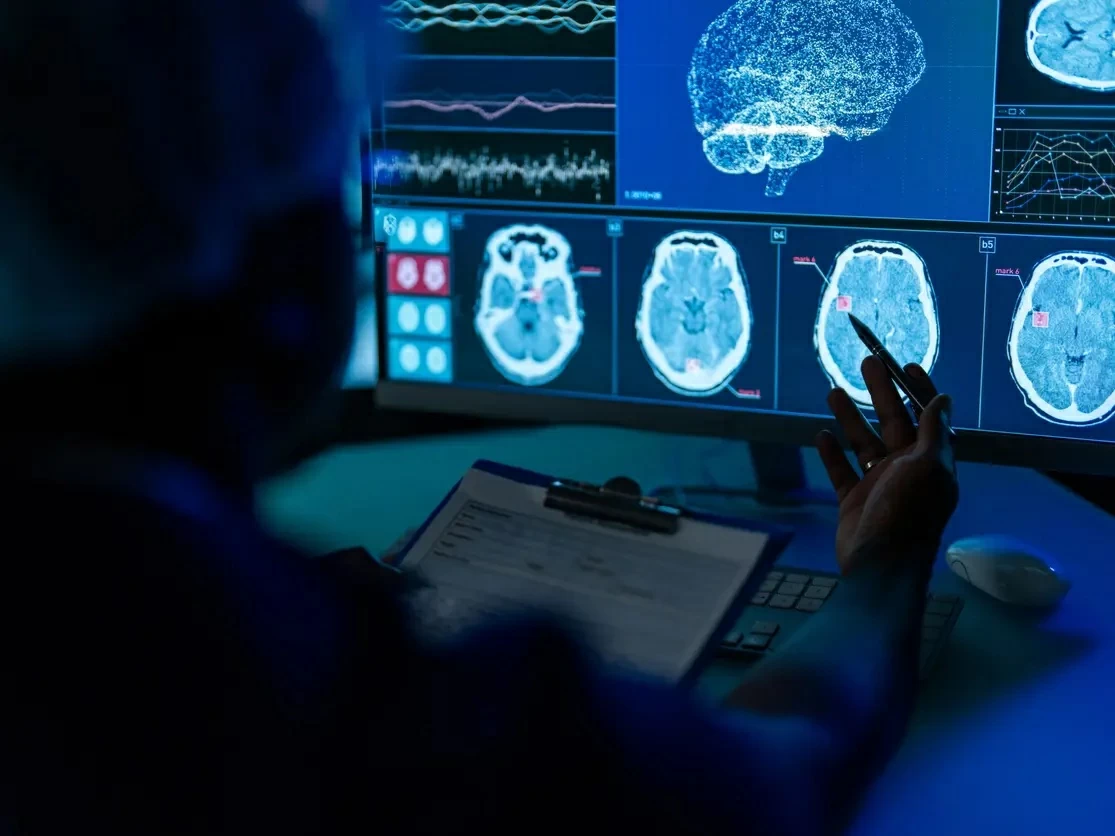
هل يتعلم الدماغ كيف يشعر بمرور الوقت، أم أن هذه القدرة موجودة فيه منذ البداية؟ سؤال بحثت فيه دراسة علمية حديثة أجراها علماء من جامعة ميشيغان الأمريكية، وتوصلت إلى نتائج تشير إلى أن إدراك الزمن قد يستند إلى خصائص فطرية في الخلايا العصبية، وليس إلى التعلم والتجربة وحدهما.
ووفقاً للدراسة المنشورة في مجلة «Nature Communications»، يعتمد الإحساس بمرور الوقت على نشاط خلايا عصبية تُعرف باسم «خلايا الزمن»، تنشط وفق تسلسلات محددة خلال فترات زمنية معينة، وتسهم في تنظيم العمليات المرتبطة بالذاكرة والتخطيط والحساب.
وللتحقق مما إذا كانت هذه الأنماط الزمنية تنشأ بصورة طبيعية أم تتشكل نتيجة التعلم، استخدم الباحثون نماذج رياضية لشبكات عصبية اصطناعية، واختبروا قدرتها على إنتاج إشارات زمنية منتظمة قبل الخضوع لأي تدريب.
وأظهرت النتائج أن بعض الشبكات، التي امتلكت إعدادات أولية مناسبة، استطاعت إنتاج أنماط منتظمة تحاكي نشاط خلايا الزمن بصورة تلقائية، حتى دون تدريب مسبق. في المقابل، لم تتمكن الشبكات ذات الإعدادات العشوائية من إنتاج الأنماط نفسها، رغم إخضاعها لتدريب مكثف.
كما لاحظ الباحثون أن المؤشرات الداخلية للشبكات القادرة على إنتاج الإشارات الزمنية ظلت مستقرة إلى حد كبير، مع إمكانية تعديل المدخلات والمخرجات، وهو ما أتاح لها التعامل مع فترات زمنية أطول دون الحاجة إلى إعادة التدريب.
وتشير هذه النتائج إلى أن الدماغ قد يمتلك آليات عصبية مهيأة مسبقاً لمعالجة الزمن، وأن التعلم يؤدي دوراً في تحسين هذه الآليات وتطوير أدائها، بدلاً من أن يكون المصدر الوحيد لنشأتها.
وفي سياق متصل، استند الباحثون إلى تجارب على عضيات دماغية مصغرة نُمّيت في المختبر، أظهرت تسلسلات منتظمة من النشاط العصبي رغم عدم تعرضها لتجارب حسية، وهو ما يوفر مؤشراً إضافياً يدعم فرضية وجود أنماط زمنية تنشأ بصورة تلقائية.
ومع ذلك، شدد العلماء على أن النتائج لا تزال قائمة بدرجة كبيرة على النماذج الرياضية، ولا تقدم دليلاً حاسماً على أن الدماغ البشري يعمل بالطريقة نفسها، مؤكدين أهمية إجراء مقارنات مباشرة مع البيانات المسجلة للنشاط العصبي، للتحقق من مدى انطباق هذه النتائج على الدماغ.
Does the brain learn how to feel the passage of time, or is this ability present from the beginning? This question was explored in a recent scientific study conducted by researchers from the University of Michigan, which found results suggesting that the perception of time may rely on innate properties of neurons, rather than solely on learning and experience.
According to the study published in the journal "Nature Communications," the sensation of time passing depends on the activity of neurons known as "time cells," which activate in specific sequences during certain time periods and contribute to organizing processes related to memory, planning, and calculation.
To determine whether these temporal patterns arise naturally or are shaped by learning, the researchers used mathematical models of artificial neural networks and tested their ability to produce regular temporal signals before undergoing any training.
The results showed that some networks, which had suitable initial settings, were able to produce regular patterns that mimic the activity of time cells spontaneously, even without prior training. In contrast, networks with random settings could not produce the same patterns, despite undergoing intensive training.
The researchers also noted that the internal indicators of the networks capable of producing temporal signals remained largely stable, with the ability to modify inputs and outputs, which allowed them to handle longer time periods without the need for retraining.
These results suggest that the brain may possess pre-equipped neural mechanisms for processing time, and that learning plays a role in enhancing these mechanisms and improving their performance, rather than being the sole source of their emergence.
In a related context, the researchers relied on experiments with miniaturized brain organoids grown in the lab, which exhibited regular sequences of neural activity despite not being exposed to sensory experiences, providing additional evidence supporting the hypothesis of spontaneously arising temporal patterns.
However, the scientists emphasized that the results are still largely based on mathematical models and do not provide conclusive evidence that the human brain operates in the same way, stressing the importance of conducting direct comparisons with recorded data of neural activity to verify the applicability of these results to the brain.